Avro Heritage Museum 2026
Greater Manchester
For nearly 200 years, this was a thriving family business, run by several generations of the Lees family. Hundreds of people were employed and its iron and steel were exported around the world. Nestles in the countryside of the Medlock Valley. The abandoned ironworks fell into decay and was demolished or reduced to ruins in the 1970s.
Operator: Tameside Metropolitan Borough Council
Address: Park Bridge Ashton-under-Lyne Greater Manchester OL6 8AQ
Ironworks access at all times. Visit website for more details and for the Heritage Trail walk.
Here you can discover the fascinating past of this once busy ironworks.
Old Workers Reminiscences
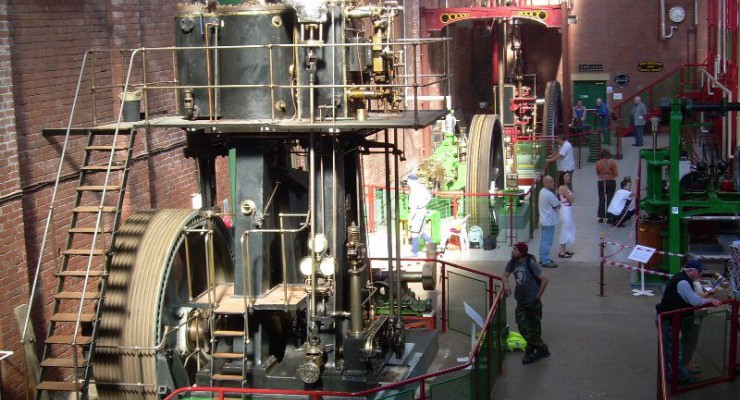
The Bottom Forge had a large steam hammer that was controlled by the hammer driver who stood at the side. It was used for forging jobs (blacksmithing). They used to make crankshafts for cotton mill engines.
The turned bars were turned in the Bright Shop on turning machines that skimmed the surface off to make them perfectly round. Thin bars were sold to textile machinery firms such as Platts of Oldham and Asa Lees. Turned steel bars went to companies such as Rolls Royce and Ford for manufacture into components for the motor trade or to Phillips bike manufacturers.
Even after the opening of the railway, local deliveries were made by horse and cart. A chain horse was kept at the end of the Wagon Road to be hitched by chains in front of the cart horse to help pull the wagons up steep Bardsley Brow in the puddle furnaces. Pig iron, cast iron scrap and swarf (turnings from the roller shop) were thrown into the puddling furnace and heated until they melted to a liquid. Then the furnaceman mixed it up and sweat it, cut the heat, until it cooled off. Then he got a long handled hook and made it into three 2ft round balls. Then the underhand came with tongs and put each ball under the steam hammer to be squeezed and then hammered into blooms.
This metal was stronger than the metal from the ball furnaces and was used for chain links for use between railway wagons. This iron didn't break, but stretched so that when a link stretched too much it could be replaced.
Greater Manchester
Greater Manchester
Greater Manchester
Greater Manchester
Greater Manchester
Greater Manchester
Greater Manchester
Greater Manchester
Greater Manchester
Greater Manchester